

- Fundamentals of Microelectromechanical Systems
- Chapter 23 of the Semiconductor Manufacturing Handbook, editor Hwaiyu Geng, McGraw-Hill, New York, 2005. (reference).
- Process Integration
- Chapter 14 of the MEMS Materials and Processing Handbook, editors R. Ghodssi and P. Lin, Springer Press, New York, to be published in January 2011. (reference).
- BioMEMS and Biomaterials for Medical Applications
- Biomaterials Science: An Integrated Clinical and Engineering Approach, edited by Yitzhak Rosen and Noel Elman, CRC Press, Boca Raton, FL, to be published in 2010.
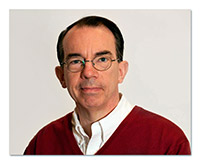
Dr. Michael A. Huff is Founder and Director of the MNX in Reston, Virginia. The MNX was established as a national-level program to provide access to MEMS implementation resources as well as to develop manufacturing techniques to help advance the technology. The MNX continues to grow at a rapid rate and serves over 6,000 customers from over 900 organizations around the country.
Dr. Huff has held a variety of notable positions, from industry to academia, working to advance and mature MEMS and Nanotechnology for commercial applications. Prior to establishing the MNX, Dr. Huff was on the faculty in the Department of Electrical Engineering at Case Western Reserve University (CWRU) in Cleveland, Ohio. At CWRU his research was focused on developing MEMS microfluidic components for healthcare and defense applications, including a novel MEMS-based insulin pump, which received national attention and was portrayed in the book One Digital Day by Rick Smolan.
Before joining the faculty at CWRU, Dr. Huff held the position of Technical Fellow at the Baxter Healthcare Corporation in Chicago, Illinois and directed Baxter's corporate-wide efforts in applying MEMS technology to novel medical devices, which resulted in several new products. At Baxter, he was also very active in managing product development in more mature technology domains such as infusion pumps, blood warmers, etc., as well as conducting technical due diligence on potential acquisitions.
Dr. Huff has actively participated in MEMS research and development for over twenty-five years and has published numerous papers on MEMS devices and fabrication technologies. Dr. Huff holds more than a dozen patents and has several others pending. His principal technological accomplishments in the MEMS technology domain include: the development of shape-memory materials for high force and large displacement actuators; the development of many novel microfluidic devices and systems; the evelopment of shape-memory alloy as an extremely high-gauge factor strain sensing material; the advancement of silicon wafer bonding as a MEMS fabrication technology; the development of silicon wafer bonding as a technique for MEMS packaging; the development of a thick polysilicon surface micromachined process for higher force or higher capacitive sense applications; the development of a Bond and Etch Back Silicon-On-Insulator (BESOI) process; the demonstration and determination of compressive stress levels in Boron etch stop layers; the development and demonstration of thermal micromachined devices having one of the broadest thermal bandwidths ever reported; commercialization of several MEMS microfluidic devices; the development of MEMS on LTCC for microwave and RF applications; the development of deep, high-aspect ratio glass and quartz etching; development of low-cost long-wavelength infrared focal-plane array imagers; the demonstration of distributed fabrication of MEMS as a viable method to implement high-quality devices; and many others.
Dr. Huff received his undergraduate degree in Electrical Engineering with Highest Honors. He spent several years working at the Missile Systems Division of Raytheon Corporation where he designed the front-end signal acquisition system for the Patriot Missile Platform. He was awarded the M.S. in Electrical Engineering and Computer Science and simultaneously the M.S. in Material Science and Engineering with a specialization in Electronic Materials from the Massachusetts Institute of Technology in Cambridge, MA. His thesis was under the supervision of one of the most notable pioneers of MEMS technology, Prof. Roger Howe, and involved the design and fabrication of a thermally-isolated microstructure for tin-oxide gas sensors. This thesis work was supported by General Motors Research in Warren, Michigan. Dr. Huff was awarded a Ph.D. in Electrical Engineering and Computer Science from MIT. His thesis involved the design and fabrication of a wafer-bonded electrostatically-actuated pressure-balanced microvalve that could operate at very high fluid pressure levels, and was supported by the Robert Bosch Company in Stuttgart, Germany. He also developed a novel threshold pressure switch using wafer bonding that employed mechanical hysteresis in a plastically-deformed thin silicon diaphragm. His thesis pioneered the now commonly used fabrication technique of silicon wafer bonding for MEMS fabrication. At MIT, he was also a finalist in the internationally famous MIT 10K Entrepreneur Competition.
Dr. Huff received a 1995 Glennan Award from CWRU and his research achievements have been cited in many popular and technical publications including the Los Angles Times, Cleveland Magazine, Crain’s Business, One Digital Day, CWRU Magazine, etc. Dr. Huff is a member of numerous professional and honorary societies including: Sigma Xi, Eta Kappa Nu, IEEE, ASME, Electrochemical Society, ASTM, Optical Society of America, and the SPIE. Dr. Huff also served on the Technical Program Committee to the Solid-State Sensor and Actuator Workshop in 2006, 2008, and 2010, served on the Technical Program Committee to International Solid-State Sensor and Actuator Conference (Transducers) in 2007 and 2009, and has served as the Chair of the North American Standards Committee on MEMS technology in SEMI in 2004 and 2005. He also served on the Joint Commission for Technology in Science (JCOTS) Nanotechnology working group, which advises the Commonwealth of Virginia’s legislature on issues related to advancing Nanotechnology in the state. Dr. Huff also serves on the advisory committee for the College of Science at George Mason University.
Dr. Huff has written several book chapters on MEMS technology including:
Dr. Huff is responsible for overall management of the MNX and is actively involved in lending his expertise and knowledge on various MNX customer development efforts.